Workshops
Working sessions, not lectures.
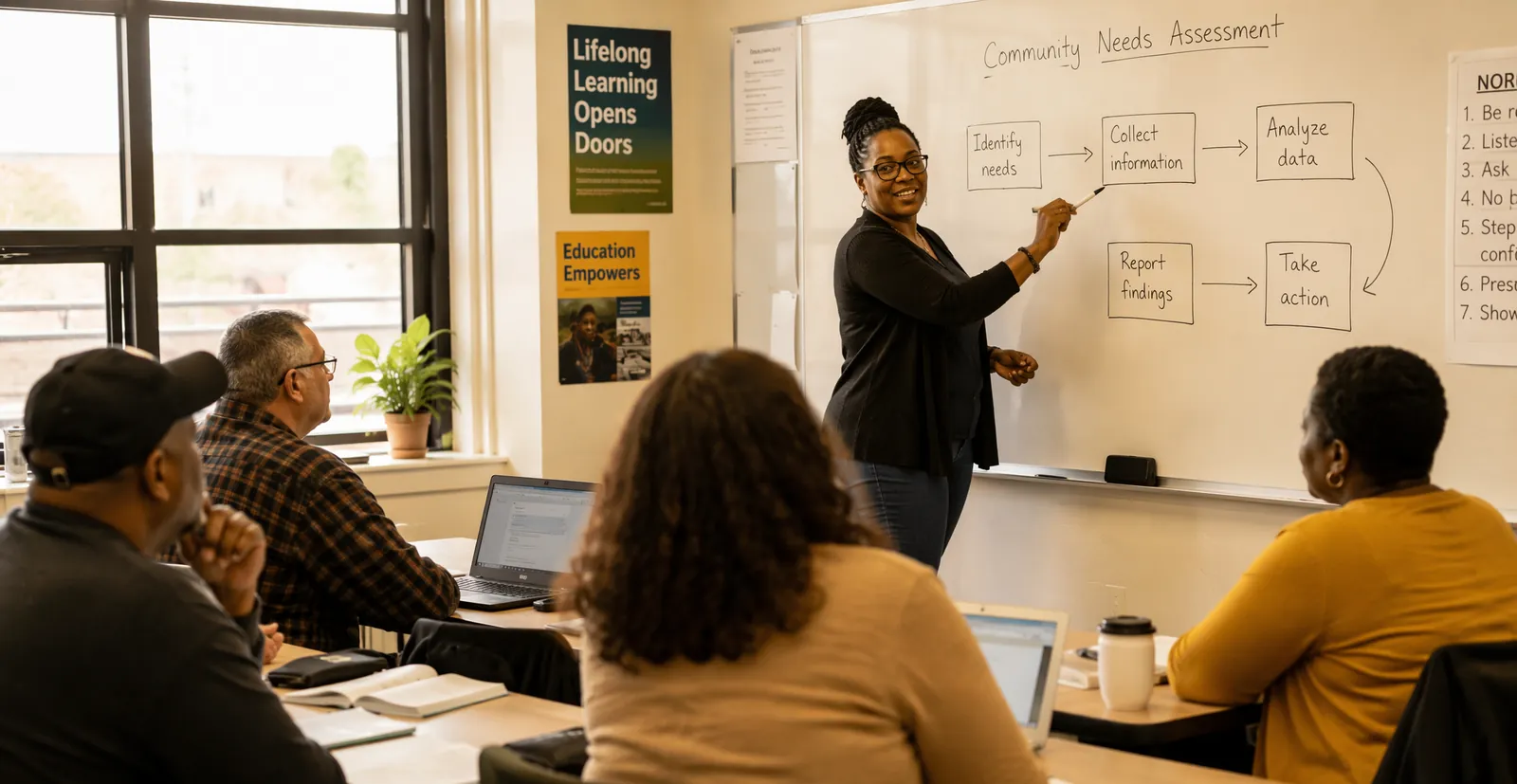
Crate South workshops are built around a simple rule: participants leave with artifacts they made, not notes they took. Every format below produces maps, canvases, and plans that survive the session.
Formats
Choose the shape that fits your room.
Guest Talk
30–45 minutesAssemblies, staff meetings, community events
A story-driven introduction: why AI literacy means systems, not just chatbots — with one live system-map walkthrough.
Introductory Workshop
90 minutesFirst exposure for any audience
Lecture-light, exercise-heavy. Participants label a real workflow and find the decision points before the session ends.
Half-Day Workshop
3–4 hoursClasses, teams, nonprofit staff
The full system map taught and applied. Participants map one real workflow from their own context.
Full-Day Intensive
6–7 hoursProject teams, educators, business cohorts
Map in the morning, prototype in the afternoon. Every team leaves with a buildable plan and a boundary document.
Multi-Week Cohort
4–6 sessionsWorkforce programs, schools, small-business groups
Weekly sessions moving from foundations to a working prototype, with assignments and review between sessions.
Custom formats
Assemblies, staff development days, conference sessions, hackathon support, and multi-site series can all be shaped to fit. Cohort sizes typically run 12–30 per facilitator.
Workshop planner
Scope the investment before the first email.
Real planning ranges from our pricing framework — the same numbers we scope proposals from. Choose a shape and see where an honest conversation starts.
Planning range
$1,500–$3,500
- Memphis metro travel is included; beyond it, travel is scoped per proposal.
- This is a planning range, not a quote. Every engagement is scoped in writing before commitment.
The standard
Nobody leaves with just notes.
Every session ends with a map, a canvas, a never-list, and a measurement plan — artifacts that survive the room.
Inside a session
The arc of every workshop.
01
Open
A story from real building work: a workflow that failed, why, and what the map would have caught. Establishes the standard: systems, not chatbots.
02
Teach
The Applied AI System Map, taught stage by stage with a public use case. Participants mark where humans decide, where AI assists, and where things break.
03
Apply
Small groups map a workflow from their own context onto the system canvas. The facilitator challenges vague AI jobs and missing approvals.
04
Share
Groups present their maps. The room stress-tests each one: what happens when the input is wrong, the reviewer is busy, the model hallucinates?
05
Commit
Each participant writes one next action and one boundary for their own work. Materials, worksheets, and the field guide go home with everyone.
What participants build
Artifacts that outlast the session.
- A labeled system map of a real workflow
- A one-page system canvas for their own problem
- A written never-list with safeguards
- A measurement plan with an honest baseline
- A cost-and-value estimate
- A named-owner responsibility map
Who's in the room
Workshops have run with students, teachers, nonprofit staff, small-business owners, and mixed community groups. The method holds across audiences because everyone maps a problem they actually have.
Every participant receives the field guide, the system canvas, and the responsible-use checklist to take back to their work.
Put a workshop on the calendar.
Share your audience, your timing, and what you want participants to walk away able to do. We'll come back with a proposed format and an honest scope.